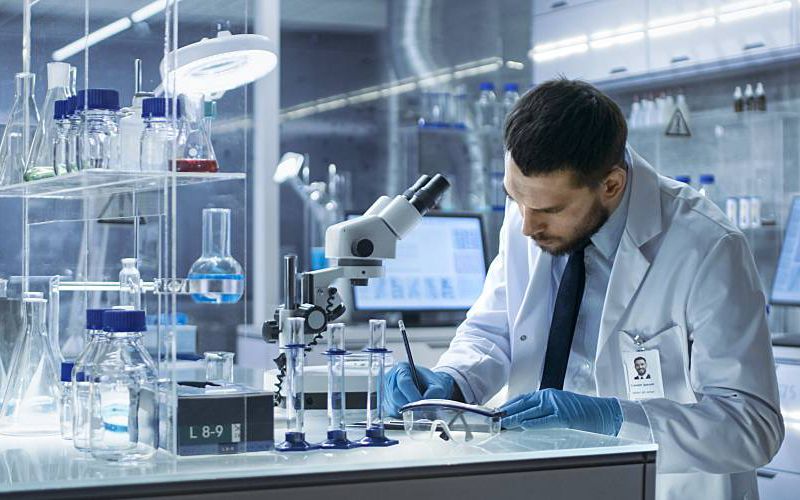

In 2025, laboratories worldwide are evolving faster than ever, blending traditional research excellence with the latest in automation, AI, and sustainable technology. From medical breakthroughs to environmental monitoring, these advancements are redefining the role of labs as not just places for experiments, but as epicenters of innovation.
1. AI-Powered Research and Data Analysis
Artificial intelligence is revolutionizing lab work by accelerating data processing and improving research accuracy.
- Automated Experiment Design: AI algorithms can design and adjust experiments based on real-time results.
- Predictive Modeling: Researchers use AI to predict outcomes, reducing trial-and-error time.
- Big Data in Science: Massive datasets from clinical trials or environmental studies are now analyzed in hours instead of months.
2. Automation and Robotics in the Lab
Robotic systems are taking over repetitive and precise tasks, freeing scientists for high-level research.
- Automated Pipetting and Sample Handling: Ensures consistent, contamination-free results.
- High-Throughput Screening Robots: Capable of testing thousands of samples per day for drug discovery.
- Remote Lab Operations: Scientists can now control experiments and monitor results from anywhere in the world.
3. Breakthroughs in Medical Research
Labs are at the center of some of the most promising medical discoveries.
- Cancer Detection at Early Stages: New biomarker tests can detect cancer years before symptoms appear.
- Regenerative Medicine: Stem cell research is advancing toward creating functional human organs in the lab.
- Personalized Vaccines: Tailored to an individual’s genetic makeup for higher effectiveness.
4. Sustainable Lab Practices
Environmental responsibility is now a core part of lab operations.
- Green Chemistry: Using less hazardous materials and minimizing waste.
- Energy-Efficient Equipment: Advanced freezers, centrifuges, and microscopes designed to consume less power.
- Eco-Friendly Waste Disposal: Biological and chemical waste is processed with minimal environmental impact.
5. Advanced Imaging and Diagnostic Tools
Visualization technology is transforming how scientists observe the microscopic world.
- Super-Resolution Microscopy: Reveals details smaller than 20 nanometers, aiding in cell biology and nanotechnology research.
- Portable Diagnostic Devices: Allow field scientists to conduct lab-quality tests outside the lab.
- 3D Bioimaging: Enables real-time viewing of live cells and tissues in three dimensions.
6. Collaboration Through Cloud Labs
Cloud-based laboratory platforms are allowing scientists to work together seamlessly across continents.
- Data Sharing in Real Time: Researchers upload findings instantly for peer review.
- Virtual Experiments: Teams can design and simulate lab work without physical constraints.
- Open Science Initiatives: Public databases allow global participation in solving scientific challenges.
7. Emerging Areas of Research
2025 is seeing new scientific frontiers open up.
- Synthetic Biology: Creating entirely new life forms for medicine, agriculture, and industry.
- CRISPR Gene Editing: Moving from experimental to clinical applications for genetic disorders.
- Nanomedicine: Using nanoparticles to deliver drugs directly to affected cells with precision.
Conclusion
Lab innovations in 2025 are not just advancing science — they’re accelerating solutions to global challenges in health, environment, and technology. As research tools become smarter, faster, and greener, the potential for discovery is expanding exponentially. Laboratories of the future will be defined not just by their equipment, but by their ability to collaborate, adapt, and lead humanity into a new era of scientific progress.