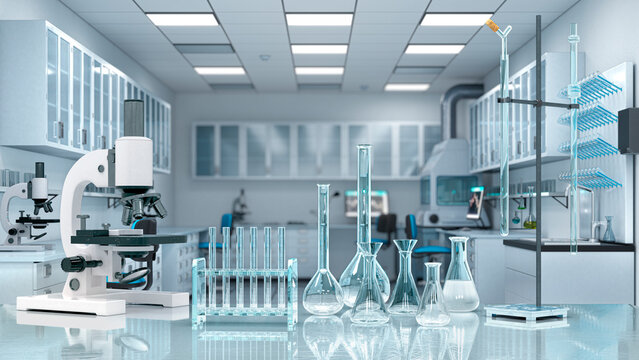

Laboratories are the heart of innovation. They are the spaces where scientists and researchers test ideas, develop solutions, and create the foundation for future breakthroughs. In 2025, laboratories worldwide are making significant progress in biotechnology, medicine, materials science, energy, and space research. These updates not only advance knowledge but also bring real-world applications that benefit humanity.
This article highlights the latest laboratory updates in 2025, focusing on how global labs are shaping tomorrow’s innovations.
1. Biotechnology Labs: Rewriting Life’s Code
Biotechnology labs are leading advancements in genetics and molecular biology.
- CRISPR Gene Editing: Labs are testing CRISPR-based therapies for inherited disorders like sickle cell anemia and cystic fibrosis.
- Synthetic Biology: Artificial organisms are being developed to produce eco-friendly fuels, medicines, and biodegradable plastics.
- Lab-Grown Meat: Food technology labs are scaling up cultured meat production, offering sustainable alternatives to animal farming.
- Virus Research: Global labs are working on universal vaccines that could protect against multiple strains of viruses.
Biotech labs are proving essential in fighting diseases, ensuring food security, and creating sustainable resources.
2. Medical Labs: Advancing Healthcare Solutions
Medical laboratories are at the forefront of life-saving discoveries.
- AI-Driven Diagnostics: Automated lab systems powered by AI are delivering faster and more accurate disease detection.
- Cancer Research Labs: Labs are developing immunotherapies that train the body’s immune system to attack cancer cells.
- Regenerative Medicine: Stem cell labs are working on regenerating damaged tissues, including spinal cord and heart tissues.
- Neuroscience Labs: Research is uncovering new insights into brain disorders such as Alzheimer’s and Parkinson’s.
These innovations are transforming healthcare from reactive treatment to preventive and personalized medicine.
3. Material Science Labs: Building the Future
Material science labs are developing next-generation materials with extraordinary properties.
- Self-Healing Materials: Labs have created polymers that can repair cracks automatically, useful in electronics and construction.
- Graphene Research: Experiments with graphene are producing ultrathin, super-strong, and highly conductive materials.
- Nanotechnology: Labs are engineering nanoparticles for drug delivery, water purification, and energy storage.
- Superconductors: Research is ongoing into room-temperature superconductors, which could revolutionize energy transmission.
Material science research is paving the way for futuristic technologies in electronics, transportation, and energy systems.
4. Energy Labs: Toward a Sustainable Future
Energy-focused laboratories are tackling one of the world’s most pressing challenges — clean energy.
- Nuclear Fusion: Labs are achieving breakthroughs in controlled fusion reactions, aiming for a limitless clean energy source.
- Battery Research: Labs are developing solid-state batteries with longer life cycles and faster charging speeds.
- Hydrogen Technology: Research into hydrogen fuel cells is expanding, offering eco-friendly alternatives for vehicles and industries.
- Solar Innovations: Labs are experimenting with transparent solar panels that could be used in windows and building materials.
Energy labs are laying the groundwork for sustainable solutions to power the future.
5. Space Labs: Discovering the Universe
Space research laboratories, including those aboard the International Space Station (ISS), are contributing unique findings.
- Microgravity Experiments: Labs in space are studying human biology in zero gravity to understand health challenges for astronauts.
- Astrobiology Labs: Experiments are investigating microbial survival in space, crucial for the search for extraterrestrial life.
- Space Materials Testing: Labs are testing how metals, alloys, and polymers behave in space conditions for future spacecraft.
- Planetary Research: Labs on Earth are simulating Martian and lunar environments to prepare for future colonization.
Space labs expand human knowledge beyond Earth and prepare us for interplanetary exploration.
6. Collaborative Global Research Labs
One of the defining features of 2025 is international collaboration among labs.
- Global Pandemic Preparedness: Labs worldwide are collaborating to build vaccine banks and rapid-response research systems.
- Climate Research Labs: International labs are working together to study rising sea levels and extreme weather.
- Open Data Labs: Many labs are sharing research findings publicly, accelerating innovation across borders.
Collaboration ensures that discoveries benefit humanity as a whole, not just individual nations.
Conclusion
Laboratories are where science meets innovation. The latest lab updates in 2025 show progress in biotechnology, medicine, materials, energy, and space exploration. From developing cures for diseases to creating sustainable energy solutions and preparing for interplanetary life, labs are the engines of human progress.
As the world faces challenges like climate change, pandemics, and resource scarcity, the role of laboratories has never been more crucial. The discoveries made today will define the technologies, treatments, and opportunities of tomorrow.